

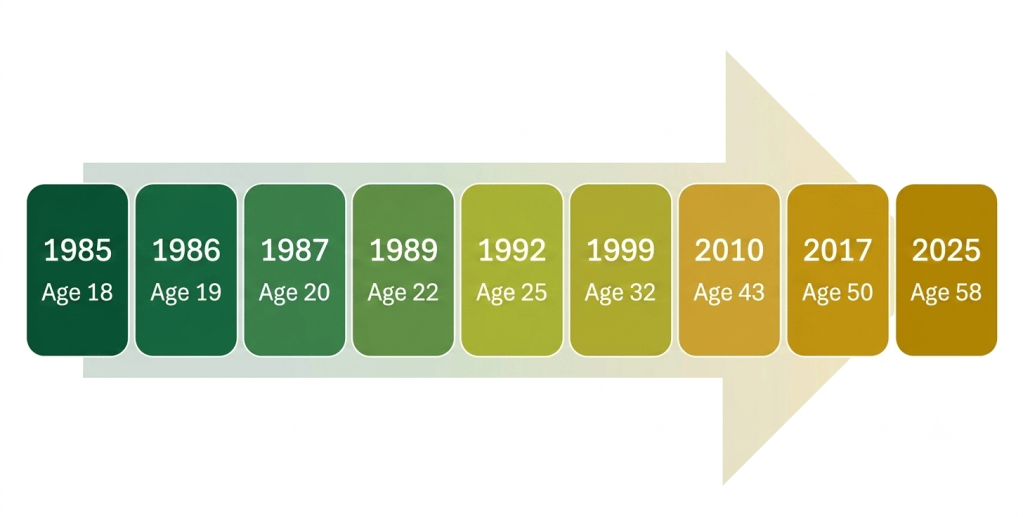
The Edmonton Transitions Study (ETS) is a 40-year longitudinal study that surveyed a sample of 983 adults nine times from age 18 until age 58. High levels of youth unemployment in Canada in the early 1980s motivated University of Alberta researchers to design a study to investigate the causes and consequences of youth unemployment. The initial plan was to survey Edmonton high school seniors just before graduation in 1985, and then twice more, in spring of 1986 and spring of 1987. By 1987, it was clear that the difficult labour market for young Canadians was leading to a prolonged transition from school to work and from youth to adult roles, so the study – focusing on school-work transitions as much as on unemployment – was extended for another two years. While unemployment rates had decreased by 1989, by 1992 another severe recession again led to high unemployment rates for youth and young adults in Alberta and the rest of Canada. A fifth wave of data collection was completed in 1992 (age 25).
With an eye on broadening the focus of the ETS beyond educational and occupational transitions to more general life transitions, a sixth survey was completed in 1999, when participants were 32 years of age. By then, almost all participants had completed their post-secondary education. Most were established in careers, involved in local communities, in long-term relationships, and raising children. Three surveys spanned the midlife years: a seventh survey in 2010-2011 when participants were 43 years old, a 2017 survey at age 50, and a 40 year follow-up survey in 2025 when participants averaged 58 years old.
Through the years, the research team learned a great deal about transitions to adulthood, including about employment and unemployment patterns, mental health trajectories, the timing of life and family transitions, and the division of household labour. The ETS also developed alongside a number of other related studies, which may be of interest. Learn more about the related studies, research team, and study publications by clicking the buttons below.
Public Use Data
Anonymized ETS data files are publicly available for academic researchers through the Inter-university Consortium for Political and Social Research. Click the button below to be directed to the ETS public use data website.

